A great devotee of Shirdi saibaba who is associated with Shri Saibaba from 72 births.
About spirituality, philosophy and Hinduism
-
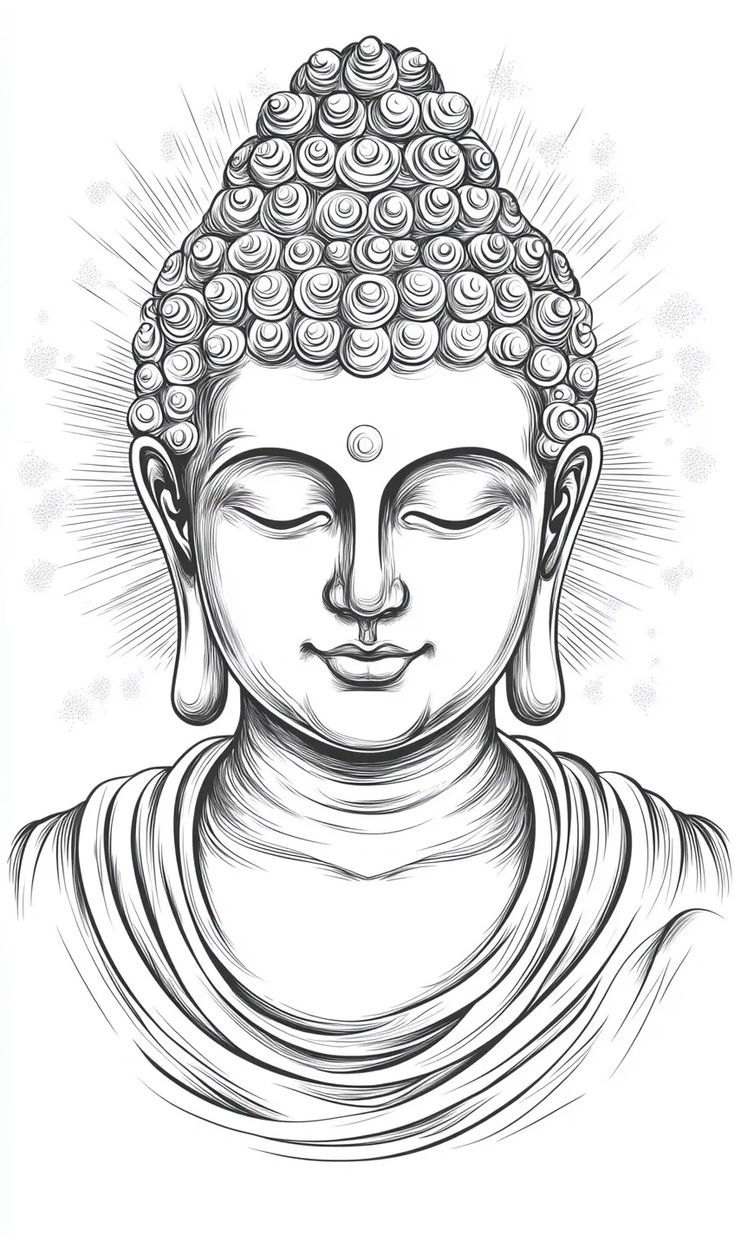
Karma – We Reap What We Sow
Intro – The Silent Judge of the Universe
Life is a journey where every thought, word, and action plants a seed. Some seeds bloom into joy, others into sorrow — but none vanish without bearing fruit. This invisible yet unerring gardener of our destiny is called Karma. It is the silent judge that records all we do and delivers justice with unfailing precision. Understanding Karma is not merely spiritual wisdom — it is the compass that guides both material success and inner peace.
1. The Compass of Life: Why Karma Matters
A fulfilling life rests on knowing how to find inner contentment and progress toward higher material and spiritual goals. Without such understanding, life becomes a series of avoidable hardships—like a person trying to drive without learning the basics.
2. Questioning God vs. Understanding Karma
When faced with challenges, many question the existence of God or His fairness. But before doubting divine justice, one must realize that the universe runs on a single driving force — Karma, also called destiny.
3. God Is Just, Karma Is Precise
God shows no favoritism. Every joy or sorrow we experience is the direct fruit of our actions. Karma is the mechanism, while God is the supreme ruler who governs the universal order without bias.
4. The Kingdom Analogy
Just as a king holds authority over his kingdom but allows laws to operate, God reigns over the universe but lets the law of Karma execute results without interference.
5. The Storehouse of Actions – Sanchita Karma
Across millions of lives, we gather a vast store of actions — good and bad. This stockpile is called Sanchita Karma. From it, only a portion ripens in each lifetime.
6. Prarabdha Karma – The Current Harvest
The Karma from past lives that is ready to bear fruit now is Prarabdha Karma. It governs the situations we face, whether joyous or painful, until exhausted.
7. Ignorance of the Law
Sadly, many are unaware of the depth of the Karma principle because teachings often focus on poetic tales rather than practical understanding. Yet Karma’s law operates with absolute certainty.
8. Karma and Common Sense
Not every hardship is Karma. If someone meditates beside an anthill and gets bitten, that’s poor judgment, not destiny. Karma applies when events occur beyond reasonable precaution.
9. Every Breath Counts
Karma isn’t just big actions. Speaking, thinking, resting, or even silently feeling emotions — all are seeds of Karma. Life is a constant stream of action.
10. How Karma Shapes Our Thinking
Past actions shape our intellect, which in turn influences the actions we take now — a cycle that continues until consciously broken through ethical living.
11. The Moral Equation
Good deeds generate uplifting Karma, leading to righteous impulses in the future. Unethical acts generate harmful Karma, drawing one deeper into wrong choices.
12. Lesson from Buddha – The Blind Sage
Buddha’s disciple Chakshupala was blind because, in a past life, he cruelly blinded a woman who had deceived him. This shows that Karma spares no one, no matter their spiritual position or power.
13. Justice Without Delay
In some cases, Karma acts instantly. Harming the innocent or the virtuous can trigger immediate consequences, as in Buddha’s account of a hunter whose cruelty led to his own sudden death.
14. The Timing of Karma
Karma may deliver results in 7 seconds, 7 minutes, 7 days, 7 months, 7 years, or even 7 lifetimes. But it always finds the doer, no matter how long it takes.
15. No Escape from the Address Book of Karma
Karma “remembers” every action and intention, keeping a perfect record. Avoiding consequences is impossible — they arrive when conditions align.
16. Justice Through Law, Not Revenge
If wronged, seek justice through lawful means rather than revenge. Retribution breeds new negative Karma, binding you further. Let fairness, not fury, guide you.
17. Avoid Harm in Thought and Deed
Even if you cannot reconcile with someone, avoid harboring malice. Thoughts carry energetic weight and contribute to your future experiences.
18. The Natural Law of Return
Those who deliberately hurt others eventually find themselves in isolation, loss, or suffering. This is not punishment from God, but a natural balancing process.
19. Your Intention Shapes Your Future
In Karma’s realm, the motive behind an action matters more than the action itself. Even a small deed done with kindness plants powerful seeds of goodness.
20. The Café of Karma
Life is like a café run by God — you brew your own coffee with the ingredients you choose. Your words, vision, feelings, and goals are the recipe. What you serve yourself tomorrow is made from what you prepare today.
Conclusion – Walk Light, Shine Bright
Karma is the invisible thread that weaves our fate. Every smile given, every wound healed, every truth spoken adds gold to the tapestry of our destiny. And every cruelty, every deceit, every selfish act knots it with darkness. Walk lightly, speak kindly, act wisely. For in the end, Karma is not your enemy or your friend — it is simply your mirror.
-
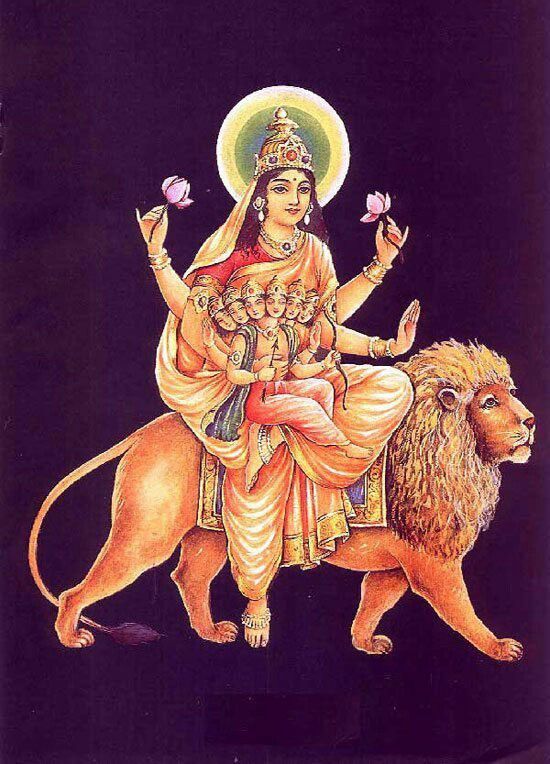
Skanda Mata – The fifth incarnation of Navadurgas
How Goddess Skanda Mata incarnated?
After getting married, Lord Rudra and Goddess Parvati (Chandra Ghanta’s Incarnation) were in solitude for 1000 years. Here, solitude refers to unity with the formless lord Brahman, be in samadhi. Other way round, Demons especially Tarakasura, were troubling and dominating deities with their powers. To face them required the progeny of Lord Rudra and Goddess Parvati. But they were in Samadhi enjoying the eternal happiness.
One day, all deities, along with Lord Brahma and Lord Vishnu, interrupted their solitude. Lord Rudra left that place, leaving his princely form. He said, “Why do you worry about Tarakusura’s death. Be as it may and be patient. Let him enjoy his authority. The time will come. Have patience”.
When he left his princely form, a semen virile as a bright light came out of him. When Lord Rudra asked about the reception of it, nobody replied that Goddess Parvati will receive it. Had all deities prayed to Goddess Parvati to take that bright light, everything would have gone smoothly. But Goddess Parvati was furious with the happening of interrupting their solitude, cursed all deities because of which they got pregnancy. This incarnation of Goddess Parvati is Skandadevi.
It is believed that Lord Agni took that light followed by Saptarishis and Himavantha, who couldn’t bear it and left it on the banks of river Ganga. It was then that virile took the birth of Skanda-The Kumaraswamy.
Goddess Skanda Mata is the name given to Goddess Parvati after the birth of Kumaraswamy, who is blessed with all powers by Goddess Parvati. He is born eternal and the guru of Maharshi Vishwamitra and Sanatkumara. He killed Tarakasura with trident and Shakthi weapon given by Lord Rudra and Skanda Mata. Skanda is regarded as Guha.
How Goddess Skanda Mata looks like?
Goddess Skanda Mata represents motherhood. She is regarded as Viswagarbha, the creator of Universe. She carries Skanda in her lap and depicted with four hands. While upper hands has two lotus flowers, she holds skanda on her right hand and is in Abhaya mudra on her left hand. She rides lion as her vehicle.
How to worship Goddess Skanda Mata?
Goddess Skanda Mata is the fifth Incarnation of Goddess Parvati and marks the fifth day of worship during Navaratri. She is associated with Gold mixed yellow colour. Offer Pongal and Wada on this day to please her. It is good to worship Skanda Mata along with his son Skanda during Navaratri. She stands as an inspiration for the seekers to attain eternity. Her life inspires seekers to always be in the devotion of Lord shiva externally and internally.
Goddess Skandamata Chanting mantras
- Ya Devi Sarvabhuteshu Trishnaa Rupena Samsthita
Namastasyai Namastasyai Namastasyai Namo Namah - Skanda Mata Manonaashi Trishula Khadga dharini
Sarvagatihi Sadananda Swethavarna Vaagaamrini - Om Sri Skandamata Maha Devyai Namah
- Om Anuraga Murthyai Sri Skandamata Maha Devyai Namah
- Om Veda Matayai Sri Skandamata Maha Devyai Namah
- Om Viswa Matayai Sri Skandamata Maha Devyai Namah
- Om Sarva Matayai Sri Skandamata Maha Devyai Namah
- Om Dhyanatapo Murthyai Sri Skandamata Maha Devyai Namah
- Om Sadananda Pradayinyai Sri Skandamata Maha Devyai Namah
- Om Brahma vidya Pradayinyai Sri Skandamata Maha Devyai Namah
- Om Ashta Kashta Nivarinyai Sri Skandamata Maha Devyai Namah
- Om Maha Vatsalya Swaroopinyai Sri Skandamata Maha Devyai Namah
Benefits of worshipping Goddess Skanda Mata
- eliminates fear and disgust
- removes conflicts between couples
- unmarried gets married
- ceases the minds of seekers and makes them achieve eternity.
How to meditate, Goddess Skanda Mata?
As per Tantric yoga and Kundalini Yoga, Goddess Skanda Mata dwells in Chandra Chakra exactly in the left at centre between Manipuraka chakra and Anahata Chakra. When the seeker crosses the lower chakras- Muladhara, Swadhishtana, Manipuraka, including surya and Chandra Chakras, he gets dispassionate for his life. Surya and Chandra Chakras arrests seekers to achieve spirituality and throw him into illusion.
- Ya Devi Sarvabhuteshu Trishnaa Rupena Samsthita
-
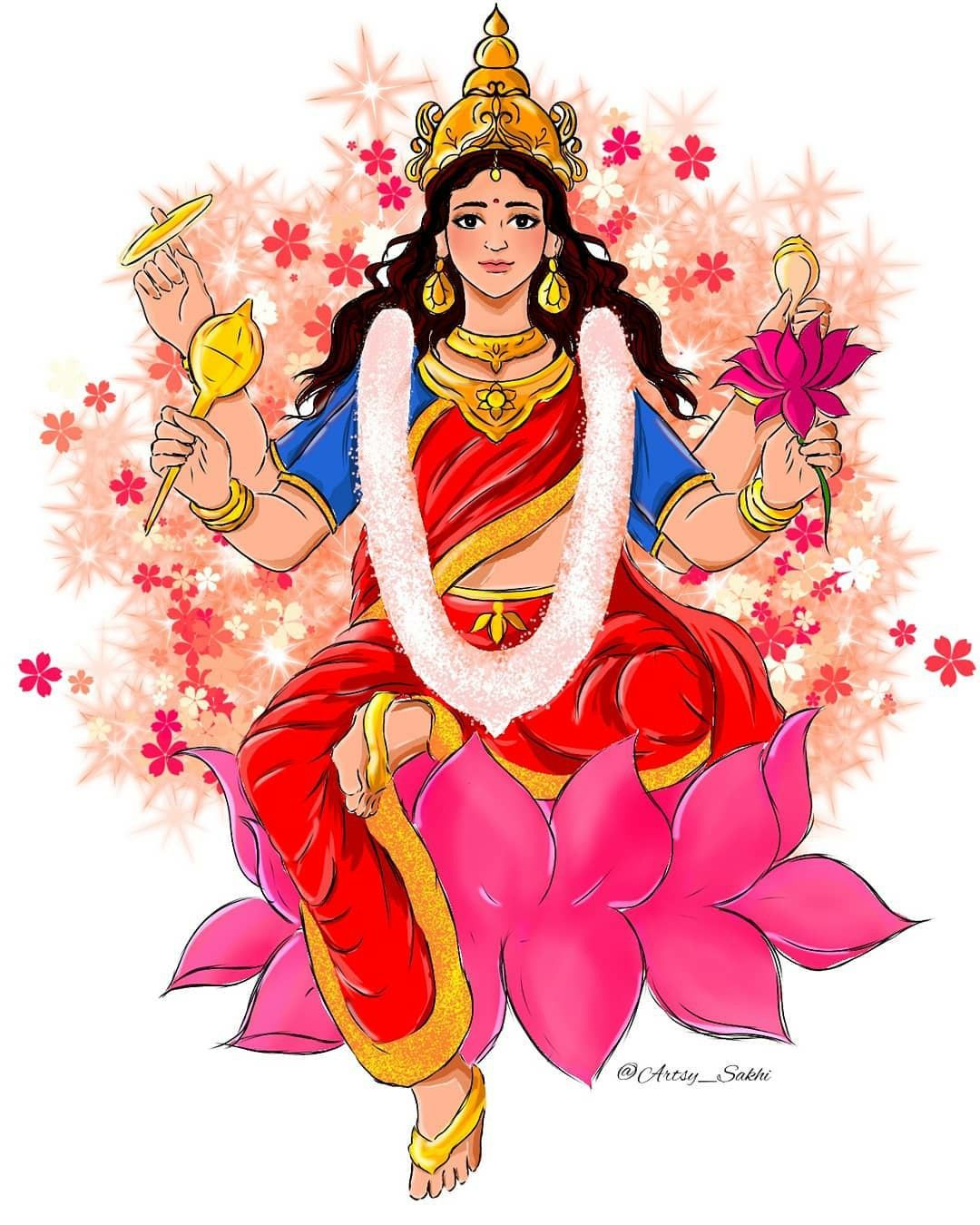
Goddess Siddhidatri – Ninth incarnation of Navadurgas
How Goddess Siddhidatri looks like?
Goddess Parvati, who turned black because of her rigorous tapas, regained her beauty when lord rudra ordered Goddess Ganga to shower on her. All applauded Lord Rudra for his prowess. She not only regained her beauty, but Lord Rudra’s nature, qualities, cognizance, expertise, powers to Goddess Parvati, emerging as Goddess Siddhidatri by his grace. The philosophy of Arthanariswara came after this incarnation. With her tapas, Goddess Parvati reached the state of Lord Rudra by his grace.
How to worship Goddess Siddhidatri?
Goddess Siddhidatri is the 9th Incarnation among Navadurgas and adored on the 9th day of Devi Navaratri. Anyone who wants to achieve divinity should fall at the divine feet of Siddhidatri. The name “Siddhidatri” shows her ability (Siddhi-the power) to give (Dhatri-giving) anything. She gives with every kind of wish her devotees desired for.
Goddess Siddhidatri’s iconography is depicted as a deity sat on a lotus flower holding mace and chakra on her right hands whilst lotus and conch on her left hands. She is associated with white colour. Offering white dress to this goddess is preferable. Offer Tomato rice and Kesari Bat (Rava Kesari) to Goddess Siddhidatri to please her.
Goddess Siddhidatri Chanting mantras during Puja
- Ya Devi Sarvabhuteshu Tushti Rupena Samsthita
Namastasyai Namastasyai Namastasyai Namo Namah - Sarva Siddhadi devata Padmesthita Chartubhuja
Ashtasiddhipradaa Shiva Siddhidatrii Sadasukhii - Om Sri Siddhidatri Mahadevyai Namah
- Om Paripoorna Mahasiddheswaryai Sri Siddhidatri Mahadevyai Namah
- Om Sarva Shakthi Swaroopinyai Sri Siddhidatri Mahadevyai Namah Namah
- Om Jagadeka Sundaryai Sri Siddhidatri Mahadevyai Namah
- Om Brahma Vishnu Indra stutayai Sri Siddhidatri Mahadevyai Namah
- Om Sarva Dukha Nivarinyai Sri Siddhidatri Mahadevyai Namah
- Om Sarvapapa Vinipatinyai Sri Siddhidatri Mahadevyai Namah
- Om Sarvapida Vinashinyai Sri Siddhidatri Mahadevyai Namah
- Om Sarva Sankata Harinyai Sri Siddhidatri Mahadevyai Namah
- Om Sarva Vigna Nivarinyai Sri Siddhidatri Mahadevyai Namah
- agna chakra sthitha shiva shakthi tatvatmane Namah.
Benefits of worshipping Goddess Siddhidatri
- removes ignorance and gives divine cognizance
- gives good fortune to her devotees
How to meditate, Goddess Siddhidatri?
As per Tantric and Kundalini Yogas, Goddess Siddhidatri is the god of Sahasrara Chakra. This is the place of where a being establishes communion with Brahman with the help of Kundalini. There are thousand petals associated with this chakra. Close your eyes and chant OM beeja mantra and try to feel Her presence.
- Ya Devi Sarvabhuteshu Tushti Rupena Samsthita
-
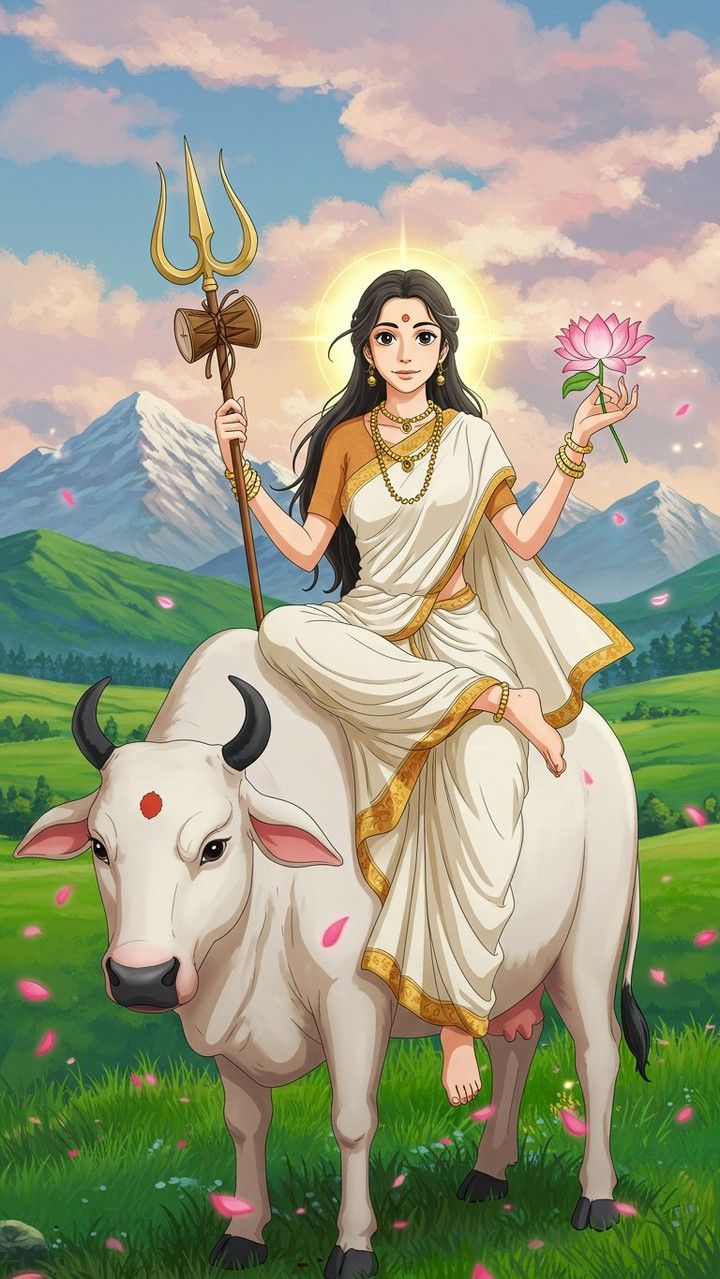
Shailaputri Devi-The first Navadurga
The incarnation
Lord Rudra was deeply depressed with self-immolation of Sati Devi, an incarnation of Goddess Parvati, the divine mother (Amma). Knowing this, she herself incarnated again as a daughter of king Himavantha and Menadevi. This virtuous couple did great tapa to be blessed with Sati Devi as their progeny. Pleased by their tapa, Amma illuminated a power in king Himavantha that resulted in his sexual desire. All deities, including Lord Brahma and Lord Vishnu, praised her glory before incarnation. She was born on the ninth day of chaitra month. Menadevi gave birth to her 11 months after pregnancy.
She was named and regarded as “Shailaputri Devi”, the first incarnation of Navadurgas. Her incarnation was not like a baby girl, but like an illumine adult. To fulfill the motherhood of Menadevi, Amma became a baby girl upon a condition of not treating her as an ordinary kid. However, this was later disobeyed by her mother for motherly love.
Lord Rudra and Shailaputri
Shailaputri devoted herself to Lord Shiva since childhood. In fact, she fell in love with him. One day Maharshi Narada visited the kingdom of Himavantha. The king asked shailaputri’s future. Seeing the marks on her palm, Maharshi said that she will be married to a dominant personality. King thought that Sathidevi herself incarnated as Shailaputri and will marry Lord Rudra.
One day, king Himavantha prayed to Lord Rudra for putting Shailaputri along with her servants Jaya Vijaya in HIS service. But Lord Rudra was not interested. Knowing this, Shailaputri raised a heated argument with HIM. Astonished by her cognizance of being still, without her (the Shakthi). HE accepted to serve him and she happily does it.
But on one day, fearing by demons, Lord Indra sent Manmadha to Gangavatharana, the place of Lord Rudra’s tapa, to create a sexual desire in HIM. Furious of Manmadha’s attempts, Lord Rudra turned him into ashes and left Shailaputri Devi alone.
The incarnation of Brahmacharini
Shailaputri Devi was deeply depressed about being left alone and performed Tapa by incarnating as Brahmacharini Devi, the second incarnation of Navadurgas. This is the story of Shaliaputri Devi’s incarnation.
How Shailaputri Devi looks like?
With the riding bull as her vehicle, she holds the trident in her right hand and a lotus flower in her left hand. She is regarded as Siddha Mahadevi, Shakini, Bhairavi and Kundalini by different shastras. She is associated with Red colour.
How to worship Shailaputri?
The first day of Dasara Navaratri Shailaputri marks as a beginning with Shailaputri Puja. On this day, Siddhaguru performed havan and Shodasha Puja, glorifying divine mother as shailaputri by chanting mantras chanted by Lord Brahma and Lord Vishnu and other deities.
Shailaputri Chanting mantras
- Ya Devi Sarvabhuteshu Shakthi Rupena Samsthita
Namastasyai Namastasyai Namastasyai Namo Namah - Om Sri Shailaputri Maha Devyai Namah
- Om Sri Maharudra Mahasatviyai Sri Parvati devyai Namah
- Om Sarveswaryai Jagadambayai Sri Shailaputri Maha Devyai Namah
- Om Vedeswaryai Sri Satidevyai Sri Shailaputri Maha Devyai Namah
- Om Sri Parabrahmanyai Sri Parvata Raja Putrikayai Sri Shailaputri Maha Devyai Namah
- Om Sri Bhuvaneswaryai Menapriyayai Sammohana Murthyai Sri Shailaputri Maha Devyai Namah
- Om Sri Narayana Stuta Adiparashakthyai Maheshwaryai Sri Shailaputri Maha Devyai Namah
- Om Maha Jagadeka Sundaryai Shailaputri Maha Devyai Namah
- Om Ashtaishwarya Pradayinyai Sri Durga Mahadevyai Sri Shailaputri Maha Devyai Namah
- Om Shivayai Rudranyai Mohanashinyai Brahmajnana Pradayinyai Sri Shiva Parvati Mahadevyai Sri Shailaputri Maha Devyai Namah
- “Lam” Prithivi Tatvatmane Namah”
How to meditate Shailaputri Devi ?
The first incarnation of Goddess Parvati is Shailaputri Devi. The colour associated with this goddess is Red.
She dwells in Muladhara Chakra (Root Chakra), at the spine’s base between anus and genitals, and appears triangle in shape. There are four petals related to this chakra.
Seeker’s journey of achieving divinity begins with this goddess. To awaken this chakra is a three-step process.
Chant “Lam” beeja mantra concentrating your mind on that chakra to feel Her presence.
What If I worship Shailaputri Devi?
Materially, she fulfils the desires of wealth and prosperity. Being the authority of Muladhara chakra, one who meditates this chakra will get rid of constipation and urinal problems.
The first incarnation of Goddess Parvati is Shailaputri Devi. The colour associated with this goddess is Red.
She dwells in Muladhara Chakra (Root Chakra), at the spine’s base between anus and genitals, and appears triangle in shape. There are four petals related to this chakra.
- Ya Devi Sarvabhuteshu Shakthi Rupena Samsthita
-
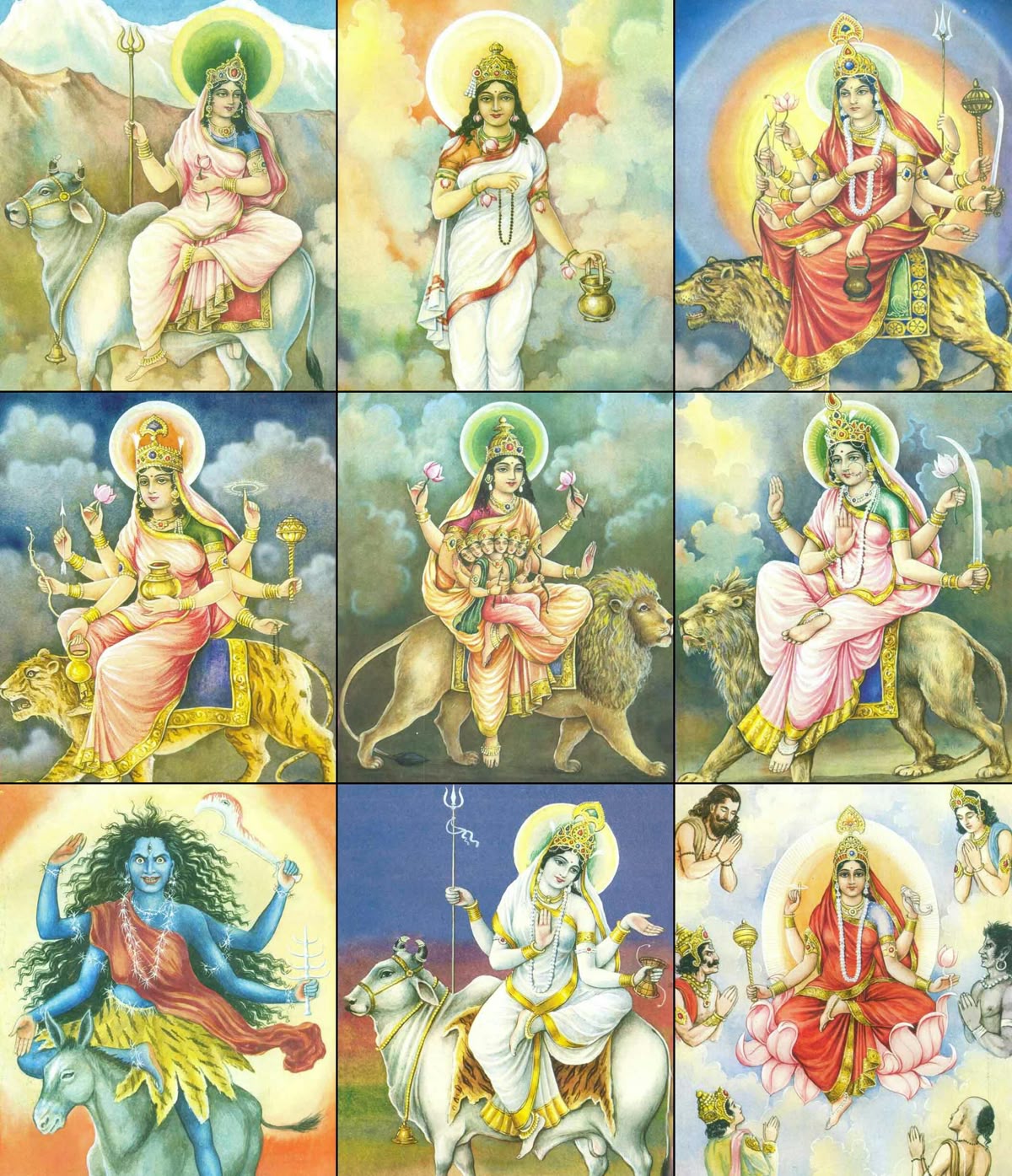
Dasara Navratri
Navadurgas – The deities of Nine chakras
Navaratri refers to divine mother-Adi Parashakti worship manifested as Navadurgas. Shailputri, Brahmacharini, Chandraghanta, Kushmanda, Skandamata, Katyayini, Kaalratri, Mahagauri and Siddhidhatri. Each Navadurga has its own significance. The tenth day is the festival – Dasara.
The secrets revealed regarding the worship of Goddess Parvati and her incarnations, Navadurgas, during this Navaratri give a clear picture of his connection with the divine.
Beginning with the history of Navadurgas, their tapas and how they inspire a human life to till their connection with Nine chakras existed in the human body leaves everyone still.
We bring you his exemplary communication about the connection between Navadurgas and Nine chakras in this video.
Goddess Shailaputri Devi
- Goddess Shailaputri Devi is the first incarnation of Navadurgas and associated with red colour.
- She is associated with muladhara chakra.
- Chant “Lam” the chakra’s beej mantra for 9 times during meditation
- Keep in mind to concentrate on the chakra while chanting this mantra
- you will gradually experience vibrations at that chakra
- Close your eyes and be in Apana mudra (meet your middle and ring fingers with thumb) and connect to Muladhara chakra.
- Once you can concentrate well, be in a position by locking your fingers (Put your right fingers on the left fingers one on one).
Goddess Brahmacharini Devi
- Goddess Brahmacharini is the second incarnation of Navadurgas and related to sandalwood and orange-red (Sindhoor) colour.
- She is associated with Swadhisthana chakra.
- Close your eyes and be in Jalamudra (meeting little finger with thumb).
- Chant “Vam” the chakra’s beej mantra for 9 times during meditation. Take and release breath for by chanting this mantra.
- Keep in mind to concentrate on the chakra while chanting this mantra
- Once you can concentrate well, be in a position by locking your fingers (Put your right fingers on the left fingers one on one).
Goddess Chandraghanta Devi
- Goddess Chandraghanta is the third incarnation of Navadurgas and related to turmeric and light yellow colour.
- She is associated with Manipuraka chakra, on the right of Navel.
- Close your eyes and be in Samana Mudra (meeting all fingers with thumb). Keep in mind to concentrate on the chakra while chanting this mantra.
- Chant “Ram” the chakra’s beej mantra for 9 times during meditation. Take and release breath for by chanting this mantra.
- Once you can concentrate well, be in a position by locking your fingers (Put your right fingers on the left fingers one on one).
Goddess Kushmanda Devi
- Goddess Kushmanda Devi is the fourth incarnation of Navadurgas and related to white and saffron colour.
- She is associated with Surya chakra, (the centre point on the right to Anahata and Manipuraka chakra).
- Close your eyes and be in Samana Mudra (meeting all fingers with thumb). This is Surya bhedi meditation. This Pranayama that relives you from cold related ailments.
- Chant “Hram” the chakra’s beej mantra for 9 times during meditation.
- Close your left nostril with ring finger and right nostril with thumb. Release your right nostril and take breath for 9 times.
- Keep in mind to concentrate on the chakra while chanting this mantra.
- Once you can concentrate well, be in a position by locking your fingers (Put your right fingers on the left fingers one on one).
Goddess Skandamatha Devi
- Goddess Skandamata is the fifth incarnation of Navadurgas and related to Gold colour.
- She is associated with Chandra chakra (the centre point on the left to Anahata and Manipuraka chakra).
- Close your eyes and be in Samana Mudra (meeting all fingers with thumb). This is Chandra Bhedi meditation that relives you from heat related ailments.
- Chant “Hreem” the chakra’s beej mantra for 9 times during meditation.
- Close your left nostril with ring finger and right nostril with thumb. Release your left nostril and take breath for 9 times. This is Chandra Bhedi pranayama, good for eliminating heat from the body.
- Keep in mind to concentrate on the chakra while chanting this mantra.
- Once you can concentrate well, be in a position by locking your fingers (Put your right fingers on the left fingers one on one).
Goddess Katyayani Devi
- Goddess Katyayani is the sixth incarnation of Navadurgas and related to forest green or dark green colour.
- She is associated with Anahata chakra, the hridaya chakra on the right of the chest).
- Close your eyes and be in Prana Mudra (meet your ring and little fingers with thumb).
- Chant “Yam” the chakra’s beej mantra for 9 times during meditation and take and release your breath 9 times.
- Keep in mind to concentrate on the chakra while chanting this mantra. This chakra heals you with divine cognizance.
- Once you can concentrate well, be in a position by locking your fingers (Put your right fingers on the left fingers one on one).
Goddess Kalaratri Devi
- Goddess Kalaratri is the seventh incarnation of Navadurgas and related to grey colour.
- She is associated with Vishuddha chakra at the throat chakra.
- Close your eyes and be in Akasha mudra (join middle finger with thumb and keep all the other fingers straight)
- Chant “Ham” the chakra’s beej mantra for 9 times during meditation and take and release your breath 9 times.
- Keep in mind to concentrate on the chakra while chanting this mantra.
- Once you can concentrate well, be in a position by locking your fingers (Put your right fingers on the left fingers one on one).
Goddess Mahagauri Devi
- Goddess Mahagauri is the eighth incarnation of Navadurgas and related to blue colour.
- She is associated with Agna chakra, in between the eye-brows.
- Close your eyes and perform Vidya Mudra or Parashakti Prakashika mudra.
- It is believed that beej mantra is “Om”, which is not. The mantra authenticated by enlightened masters like Veerabrahmendra swami is “ham and ksham”, representing Lord Shiva and Shakthi in duality.
- Chant “Ham” and Ksham the chakra’s beej mantra for 9 times during meditation and take and release your breath 9 times. This is Shiva-Shakthi Meditation.
- Keep in mind to concentrate on the chakra while chanting this mantra.
- Once you can concentrate well, be in a position by locking your fingers (Put your right fingers on the left fingers one on one).
Goddess Siddhidhatri Devi
- Goddess Siddhidatri is the ninth incarnation of Navadurgas and related to white colour.
- She is associated with Sahasrara chakra, the crown chakra at top of the head. Seeker experiences his nature of divine at this chakra.
- Close your eyes and be in chin mudra (keeping other fingers straight,meet your right and index finger). This mudra represents Prakriti and Purusha.
- Chant “OM” the chakra’s beej mantra for 9 times during meditation and take and release your breath 9 times.
- Keep in mind to concentrate on the chakra while chanting this mantra.
- Once you can concentrate well, be in a position by locking your fingers (Put your right fingers on the left fingers one on one).
Each Navadurga is a step-up in human life. To worship these nine deities externally engineers you to experience the divine internally.
-
Maha Gauri
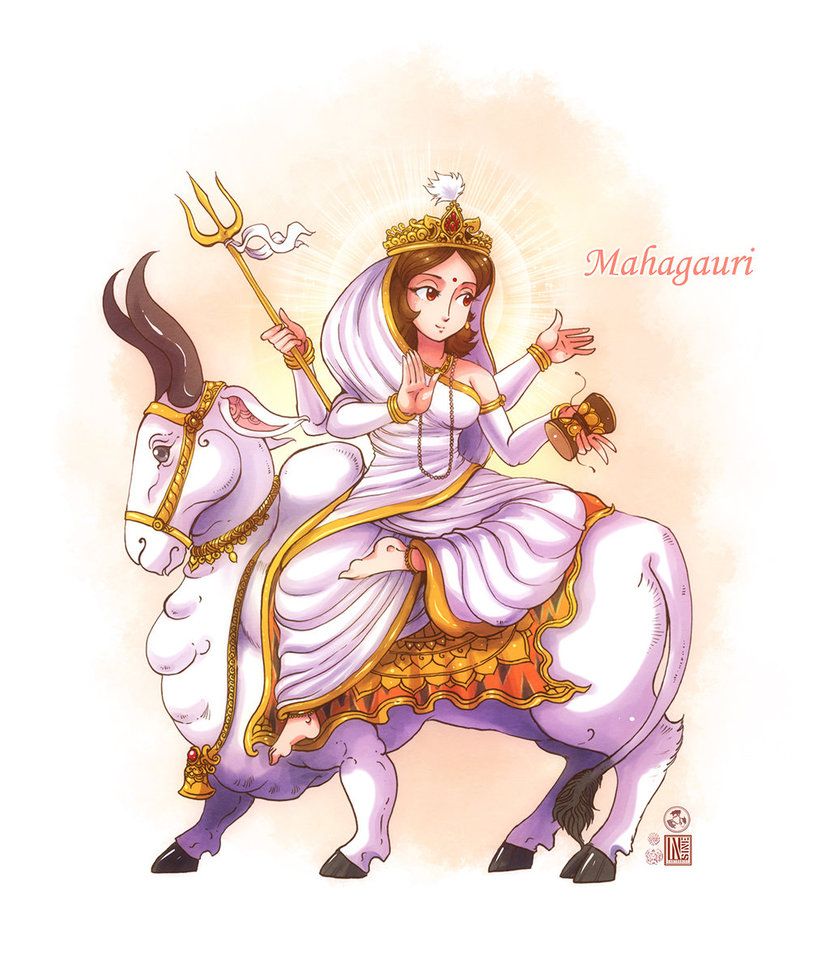
Maha Gauri -The eighth incarnation of Navadurgas
Maha gauri emerged from Vedas. Maha Gauri means extreme white (Gaura) complexion. She got that colour because of Lord Shivas Love and affection. When Goddess Parvati observed rigorous tapas, Lord Rudra, manifested for her uninterrupted devotion, could not bring out Parvati from Nirvikalpa Samadhi.
Then Lord Rudra shined with an adorable light equivalent to 1000crores of sunlight, with which she opened her eyes and had a darshan of Maharudra and became his consort.
She developed a dark complexion during her tapas. By seeing her appeal, he felt bad and ordered Ganga to shower on Goddess Parvati. The moment it happened, Goddess Parvati shined with an extreme white complexion and emerged as Mahagauri.
How Goddess Mahagauri looks like?
Goddess Mahagauri is the name given after gauri, extremely white. She is depicted with four hands holding Trident and Abhaya Mudra in her right hands, Damaru and Varada Mudra in her left hands. She is also depicted sitting on a bull.
How to worship Goddess Mahagauri?
Goddess Mahagauri is the 8th Incarnation among Navadurgas and adored on the 8th day of Navaratri. She is related to white colour. Wearing grey attire is preferable. Goddess Mahagauri is regarded as Sarvamangala as she gives auspicious life to those who worship her. Offer Coconut rice and Kesari Bat (Rava Kesari) to Goddess Mahagauri to please her.
Goddess Mahagauri Chanting mantras
- Om Sri Mahagauri Devyai Namah
- Ya Devi Sarvabhuteshu Tushti Rupena Samsthita
Namastasyai Namastasyai Namastasyai Namo Namah - Mahagauri Sumangala Gouravarna Paratpara
Sarvabhoga Sukhaprada Soudamini Muniswari - Om Parama Shanti Swaroopinyai Sri Mahagauri Mahadevyai Namah
- Om Dhyana Tapo Dhurandarayai Sri Mahagauri Mahadevyai Namah,
- Om Mano titaya Mahagouri devyai Namah
- Om Maya titayai Sri Mahagauri Mahadevyai Namah
- Om Nitya Brahmananda Nishta Garishthayai Sri Mahagauri Mahadevyai Namah
- Om Sri Mangala Gauryai Sri Mahagauri Mahadevyai Namah
- Om Ashtaishwarya Pradayinyai Sri Mahagauri Mahadevyai Namah
- Om Tushti – Pushti Pradayinyai Sri Mahagauri Mahadevyai Namah
- Om Brahmajnana Pradayinyai Sri Mahagauri Mahadevyai Namah
- Om Ardhanarishwaryai Sri Mahagauri Mahadevyai Namah
- Om Dhyana tapaswinyai Mahagouri devyai Namah
- Om Nishta garishtayai Mahagouri devyai Namah
- Agna chakra sthitha shiva shakthi tatvatmane Namah.
Benefits of worshipping Goddess Mahagauri
- Establishes uninterrupted connection with God
- Worship transforms bad into good.
- Gives luxurious life and happiness
How to meditate Goddess Mahagauri?
As per Tantric yoga and Kundalini Yoga, Goddess Mahagauri governs Agna Chakra. She is regarded as Hakini, the goddess of agna chakra. This is the place of Shiva and Shakthi, beyond which there is a communion of Shiva and Shakthi as Brahman. There are two petals associated with this chakra.
It is believed that beej mantra is “Om”, which is not. The mantra authenticated by enlightened masters like Veerabrahmendra swami is “ham and ksham”, representing Lord Shiva and Shakthi in duality.
-
Kushmanda Devi
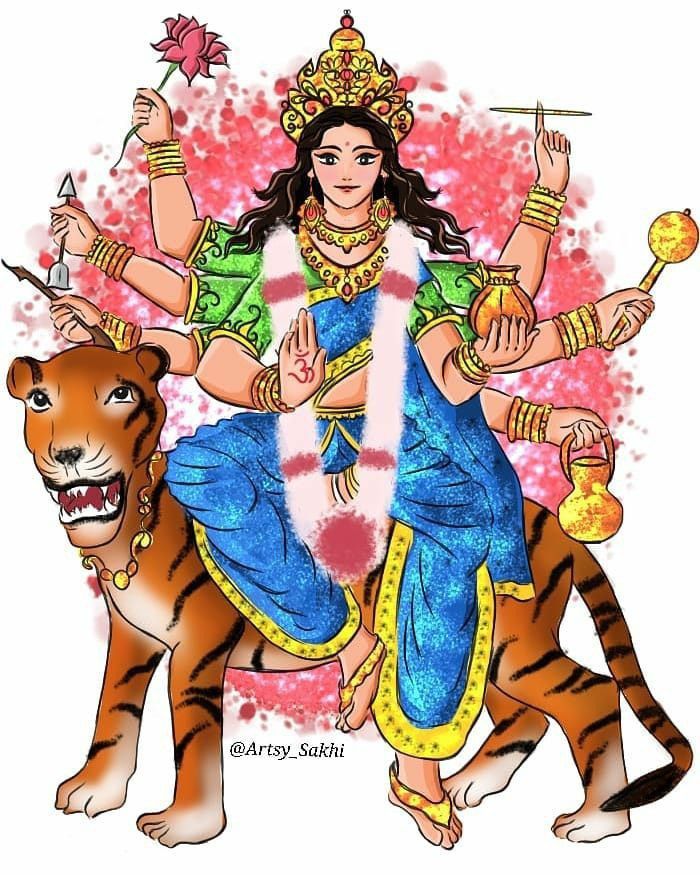
Kushmanda Devi – Fourth Incarnation of Navadurgas
Who is Kushmanda Devi? How she incarnated?
There are mystical secrets in Kushmanda Devi’s incarnation. Kenopanishad glorifies this divine mother, Kushmanda Devi.
Once deities defeated, demons in a battle and deities won and had a party. They were fully drowned in the ocean of pride, leaving the fact that Brahman is the source of their mighty victory. All were puffed up with illusion and celebrating their success by bragging themselves.
To bring them to their senses, Goddess Parvati taught them a lesson by appearing as a divine bright light-the formless Brahman. All the deities were astonished by seeing that adorable spirit and could not guess what it was. Lord Indra appointed Agni to find out its history and greatness.
When Agni approached Brahman and bragged about his immense power of burning anything that comes to him, then Brahman put forth a dry blade of grass and asked him to turn it to ashes. Agni used all his power but couldn’t burn it. Then Indra sent vayu who can carry off whatever is present on this earth. Even he could not move it.
All deities requested Indra to find out who this spirit was. Feeling the pride of his own power, he approached that spirit, but it disappeared. Indra was observing it and the moment he glanced at the sky, a woman’s voice touched his ears and that spirit took a woman’s form. She is Hymavathi, regarded as Kushmanda Devi, the fourth incarnation of Navadurgas.
When Indra asked her about that adorable light, she replied that the light was Lord Shiva, her formless form who was the backbone for their victory and appeared to destroy their false sense of pride.
Hearing this, Indra and other deities realized the fact, glorified Lord Shiva and Goddess Shakthi. This is the story of Goddess Kushmanda Devi.
Kushmanda means Gourd. This universe appears to be like a gourd. That divine mother created this universe and so is regarded as Kushmanda Devi. She represents the formless light. Her abode is Sun.
How Goddess Kushmanda looks like?
Goddess Kushmanda has eight hands holding a kamandalu, bow, arrow and lotus flower on the right and trident, Amruta kalasham, Japamala, Gada and Chakra on her left. Her abode is the Sun, and the color associated is white. She rides lion as her vehicle.
How to worship Goddess Kushmanda?
The fourth day of Devi Navaratri marks for Kushmanda Devi Puja. On this day, Siddhaguru performed havan, abhishekam and Shodasha Puja, glorifying divine mother by chanting mantras chanted in Vedas. Offer Curd rice on this day to please her. She is associated with white and saffron colours.
Goddess Kushmanda Chanting mantras
- Ya Devi Sarvabhuteshu Chaitanyabhideeyate
Namastasyai Namastasyai Namastasyai Namo Namah - Kushmanda Parameshtini Surya Mandala Bhasita
Vidyutprabha cha Vidyuta Tejaswini Mahavashi - Om Surya Antaryaminyai Sri Kushmanda Maha Devyai Namah
- Om Sarvadevata Garva Vinashinyai Sri Kushmanda Maha Devyai Namah
- Om Brahmajnana Pradayinyai Sri Kushmanda Maha Devyai Namah
- Om Devadevyai Sri Kushmanda Maha Devyai Namah
- Om Visweswaryai Sri Kushmanda Maha Devyai Namah
- Om Sarvadevata Stuta Sri Kushmanda Maha Devyai Namah
- Om Maha Tejswinyai Sri Kushmanda Maha Devyai Namah
- Om Sarva Hridaya Antaryaminyai Sri Kushmanda Maha Devyai Namah
Benefits of worshipping Goddess Kushmanda
- ego is annihilated,
- gain eternal cognizance,
- experience the eternal happiness.
How to meditate, Goddess Kushmanda?
As per Tantric yoga and Kundalini Yoga, Goddess Kushmanda dwells in Surya Chakra exactly in the right centre between Manipuraka chakra and Anahata Chakra. When the seeker crosses the lower chakras- Muladhara, Swadhishtana, Manipuraka, including surya and Chandra Chakras, he gets dispassionate for his life. Surya and Chandra Chakras arrests seekers to achieve spirituality and throw him into illusion.
Chant “Hram” (the surya Chakra’s beejakshara mantra for 9 times) concentrating your mind on that chakra. There are three letters hidden in this mantra. HA, RA, MA. The God of “Ha” is Sada Shiva, “Ra” is Agni and Ma is Parameswara.
- Ya Devi Sarvabhuteshu Chaitanyabhideeyate
-
Katyayani
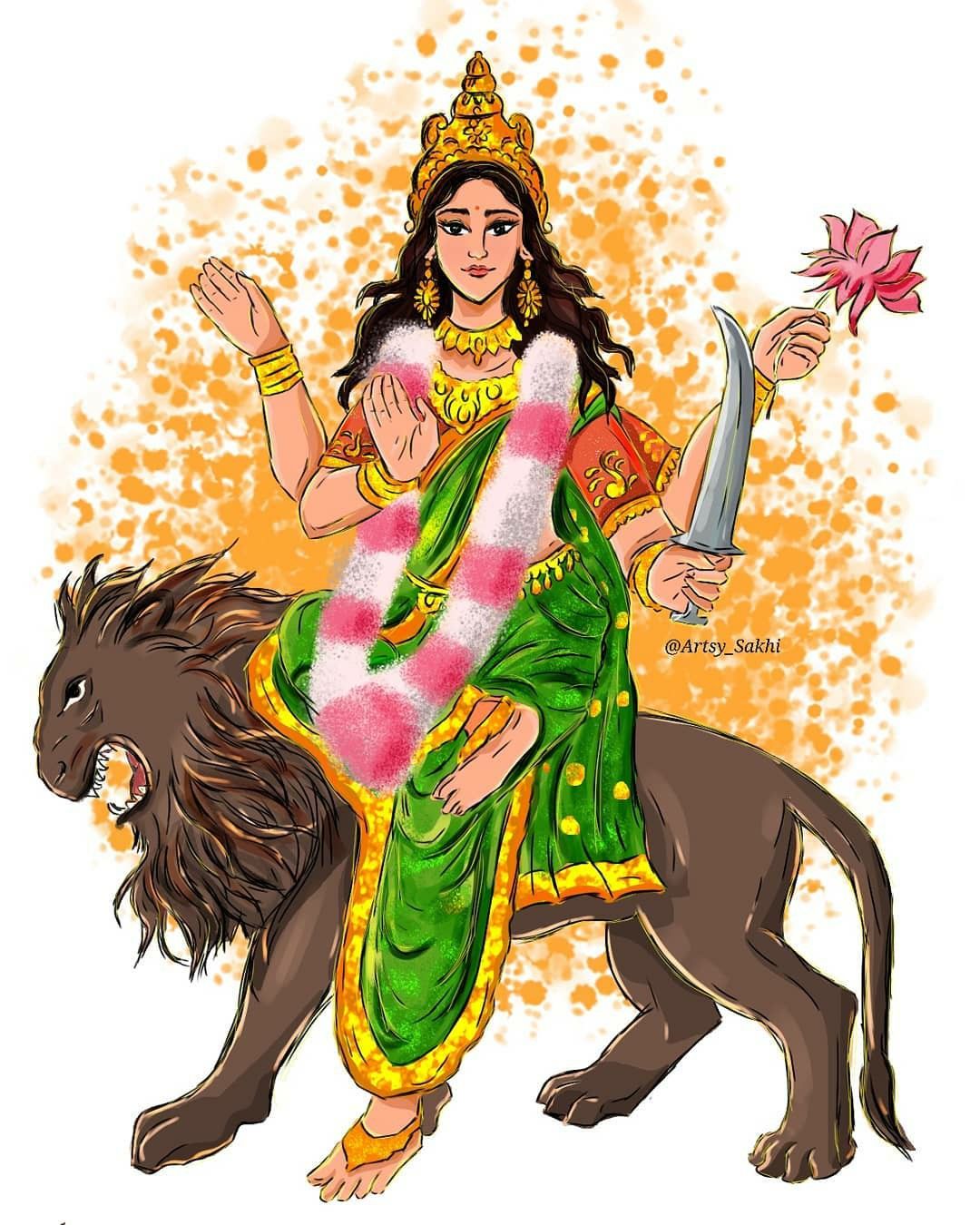
Katyayani -The sixth incarnation of Navadurgas.
It is believed that there are two stories related to Goddess Katyayani. In the first story, when Goddess Parvati closed Lord Rudra’s eyes, the entire universe turned dark. Even the colour of Goddess Parvati turned black. Seeing this, Lord Rudra asked her to become progeny of Sage Katyayana and perform tapas to get back her colour and make the universe bright again. Goddess Parvati did the same.
The above story isn’t referenced in Devi Bhagavatam. However, Sage Katyayana has a little girl named Katyayani and may be an ardent devotee of Lord Shiva. The story may not be identified with Goddess Katyayani.
The second story is, according to Devi Bhagavata, from the adorable light of Lord Rudra, a form appeared to destroy Mahishasura, an evil demon who was gaining power day by day and become a headache for the universe. The form appeared from that adorable light is Goddess Katyayani, the sixth and incarnation of Navadurgas. All deities have given her their splendour to kill that evil demon. She killed Mahishasura and saved the universe from his annoyance.
The initial five manifestations of Navadurgas by Goddess Parvati showed up from her first manifestation, Goddess Shailaputri. In the sixth, she appeared from Lord Rudra’s adorable light.
How Goddess Katyayani looks like?
Goddess Katyayani is the embodiment of divine love and exemplification of courage and warrioress. also administers Goloka. Siddhagurus believe that Radhadevi and Srikrishna are the manifestations of Katyayani Devi.
Goddess Katyayani has four hands, carrying lotus flower and sword in her left hands whilst keeping Abhaya and Varada Mudras on her right hands, and rides roaring lion as her vehicle.
How to worship Goddess Katyayani?
Goddess Katyayani is the 6th Incarnation of Navadurgas and adored on the 6th day of Navaratri. She is related with Dark Green or Forest green tone. Offer Sweet vermicelli-Meethi Seviyan on this day to satisfy her.
Goddess Katyayani Chanting mantras
- Ya Devi Sarvabhuteshu Kanti Rupena Samsthita
Namastasyai Namastasyai Namastasyai Namo Namah - Katyayani Chaturbhuja Vraja mandala Taapasi
Shatrunashi Prasannada Dharmardha kama mokshada - Om Sri Katyayani Mahadevyai Namah
- Om Goloka Adhishtana Sri Katyayani Mahadevyai Namah
- Om Vrajamandala Mahadevyai Sri Katyayani Mahadevyai Namah
- Om Divyaprema Swarupinyai Sri Katyayani Mahadevyai Namah
- Om Mahishasura mardinyai Sri Katyayani Mahadevyai Namah
- Om Srikrishna Sevita Madhuraprema Rupinyai Sri Katyayani Mahadevyai Namah
- Om Sri Adilakshmi Mahadevyai Katyayani Mahadevyai Namah
- Om Gopkajana Aradhita Sri Katyayani Mahadevyai Namah
- Om Rudra Tejodbhavayai Sri Katyayani Mahadevyai Namah
- Om Maharaseswaryai Sri Katyayani Mahadevyai Namah
- yam vayutatvatmane Namah.
Benefits of worshipping Goddess Katyayani
- destroys enemies of her ardent devotees
- develops divine love and uninterrupted devotion towards God and guru.
- destroys the Mind, Mahishasura dwelled in everyone that takes them faraway from the divine.
- ceases the minds of seekers and makes them achieve eternity.
How to meditate, Goddess Katyayani?
As per Tantric yoga and Kundalini Yoga, Goddess Katyayani governs Anahata Chakra. This chakra has 12 petals and describes the philosophy of love. Meditation of this chakra takes the seeker nearer to the divine.
Chant “yam” the beej mantra by concentrating your mind on that chakra. This is Vayu (Air) mantra.
- Ya Devi Sarvabhuteshu Kanti Rupena Samsthita
-
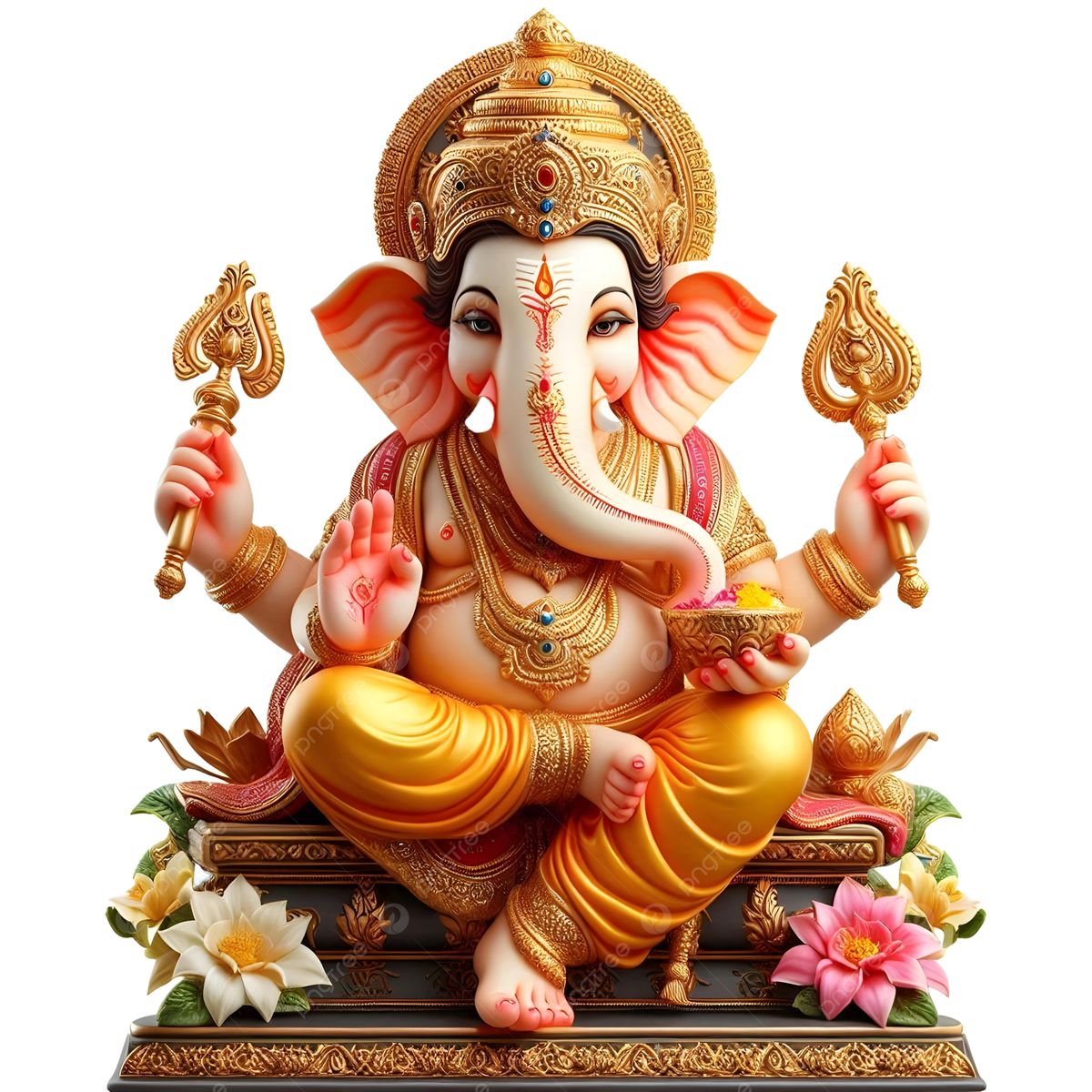
Ganesh Chaturthi Pooja Vidhi & Significance
- Ganesh Chaturthi is not just a festival—it is a sacred opportunity to invite wisdom, prosperity, and auspiciousness into the home. Observing it at home reinforces family bonds and spiritual samskaras.
- Lord Ganesha, the remover of obstacles (*Vighnaharta*), is worshipped at the start of all auspicious occasions. His presence blesses our home with peace and success.
- Celebrating this pooja at home allows children to witness rituals and learn the deeper meanings of devotion, gratitude, and discipline.
- The energy created during the pooja purifies the home atmosphere and invokes divine vibrations.
- As per grihagnan, performing Ganesh Pooja with devotion activates *sankalpa shakti*—the power of positive intent.
- The idol, whether clay or metal, becomes a divine guest (*Atithi*) in your home. Treating Him with love, rituals, and offerings develops *atithi samskara*.
- Preparing prasadam at home connects the family with the tradition of seva and sacred food.
- Eco-friendly Ganesh idols symbolize our commitment to dharma and nature. This act becomes an offering to Bhoomi Devi.
- Involving every family member in different parts of the pooja—cleaning, decorating, chanting—strengthens unity and dharmic living.
- It reminds us of impermanence—after ten days, Lord Ganesha is immersed. Yet His blessings remain.
- Lighting lamps and chanting *Ganesha Ashtottaram* or *Ganapati Atharvashirsha* uplifts the mind.
- Daily aarti with devotion is an act of anchoring divine consciousness in everyday life.
- Offering durva grass and modaks has symbolic significance—both are dear to Ganesha and represent humility and sweetness.
- Financial budgeting for the pooja teaches children discipline in spending and spiritual priorities.
- Decorating the mandap using flowers, mango leaves, and turmeric water is an act of beautifying the space for divine presence.
- Writing Ganapati mantras on rice flour or turmeric rice instills concentration and bhakti.
- During visarjan, offering coconut and flowers in water represents releasing ego and welcoming change.
- Sharing prasadam with neighbors and relatives strengthens community ties.
- Offering 21 modaks symbolizes the 21 inner energies that Ganesha governs.
- 20. When done with faith and purity, Ganesh Chaturthi pooja turns the home into a sanctified space, where grihagnan blossoms into grihalakshmi and gruhaprabhutvam.
Ganesh Chaturthi Pooja Vidhi (Step-by-Step Ritual)
- **Clean the home and puja space:** Early morning cleaning is symbolic of inner purification.
- **Place a wooden platform (chowki)** and spread a clean cloth.
- **Install the Ganesha idol** with devotion, facing east or west.
- **Invoke Lord Ganesha** with mantras and offer akshata (uncooked rice mixed with turmeric).
- **Perform Sankalpa:** Declare your intention to perform the pooja with your name, date, and family.
- **Offer Panchamrit Abhishekam** (milk, curd, ghee, honey, sugar) to the idol if clay idol is not used.
- **Offer vastram (cloth), flowers, durva grass, and sacred thread** to the deity.
- **Light diya and incense sticks**, and begin chanting of Ganesha Ashtottaram or Ganapati Atharvashirsha.
- **Offer modaks, fruits, coconut, and jaggery** as naivedyam.
- **Perform aarti** and distribute prasadam to family members.
Items Required for Ganesh Pooja
- Ganesh idol (preferably clay or eco-friendly)
- Cloth
- Flowers, garlands, and mango leaves
- Incense sticks and diya
- Ghee, cotton wicks
- Panchamrit ingredients (milk, curd, ghee, honey, sugar)
- Fruits, modaks, coconut, jaggery
- Turmeric, kumkum, sandal paste
- Akshata (turmeric rice)
- Betel leaves, betel nuts, camphor
- Durva grass, sacred thread